USA Swimming Motivational Time Standards, Explained
By the Swimo.fit team · August 30, 2026
If your swimmer came home talking about a 'BB time', this is the system they mean. Here is how the motivational standards ladder works, how to read it, and how to use it without taking the joy out of racing.
What the letters mean
USA Swimming publishes motivational time standards: a ladder of benchmark times for every stroke and distance, stepping up through B, BB, A, AA, AAA, and AAAA. A 'B time' is an early, reachable benchmark; 'AAAA' sits near the top of age-group swimming. The word motivational is the point: they exist to give developing swimmers a next rung, not to sort children into worthy and unworthy.
The standards are organized by age group, gender, course, and event. That means a single swimmer has a whole grid of them: their 50 free benchmark is different from their 100 back benchmark, their short-course standard differs from long-course, and everything shifts when they age up.
How to read them without the overwhelm
The grid looks intimidating, but families only ever need a tiny slice of it: your swimmer's age group and the three or four events they actually race. Two details save a lot of confusion:
- Course matters. Short-course yards, short-course meters, and long-course meters are separate standards for the same event, and a time achieved in a yards pool is compared against yards benchmarks only.
- Aging up resets the ladder. A swimmer who held an A time at the top of one age group may hold a BB against the next group's standards. That is the system working, not the swimmer regressing.
What they're used for in practice
Clubs and LSCs use the standards in a few concrete ways: some meets set entry cuts at a given level, coaches use them to pick realistic goal times for the season, and swimmers use them the way the name intends: as the next thing to chase. A new standard achieved is a milestone worth celebrating regardless of where the swimmer placed in the heat.
They are also revised periodically, typically on a multi-year cycle. That is why this guide quotes no actual times: the right place to read the current numbers is always the published standards themselves, or software that keeps them current for you.
Using standards well with young swimmers
The ladder motivates when it is framed as personal progress and corrodes when it becomes comparison between teammates. A few habits that keep it healthy:
- Talk about the swimmer's next rung, not the highest one. The step from B to BB is the whole game for most age-groupers
- Anchor goals to events the swimmer actually races and enjoys
- Expect plateaus around growth spurts and age-ups, and say so out loud before they happen
- Celebrate the standard achieved, not only the race won
The worked example: standards in Swimo.fit
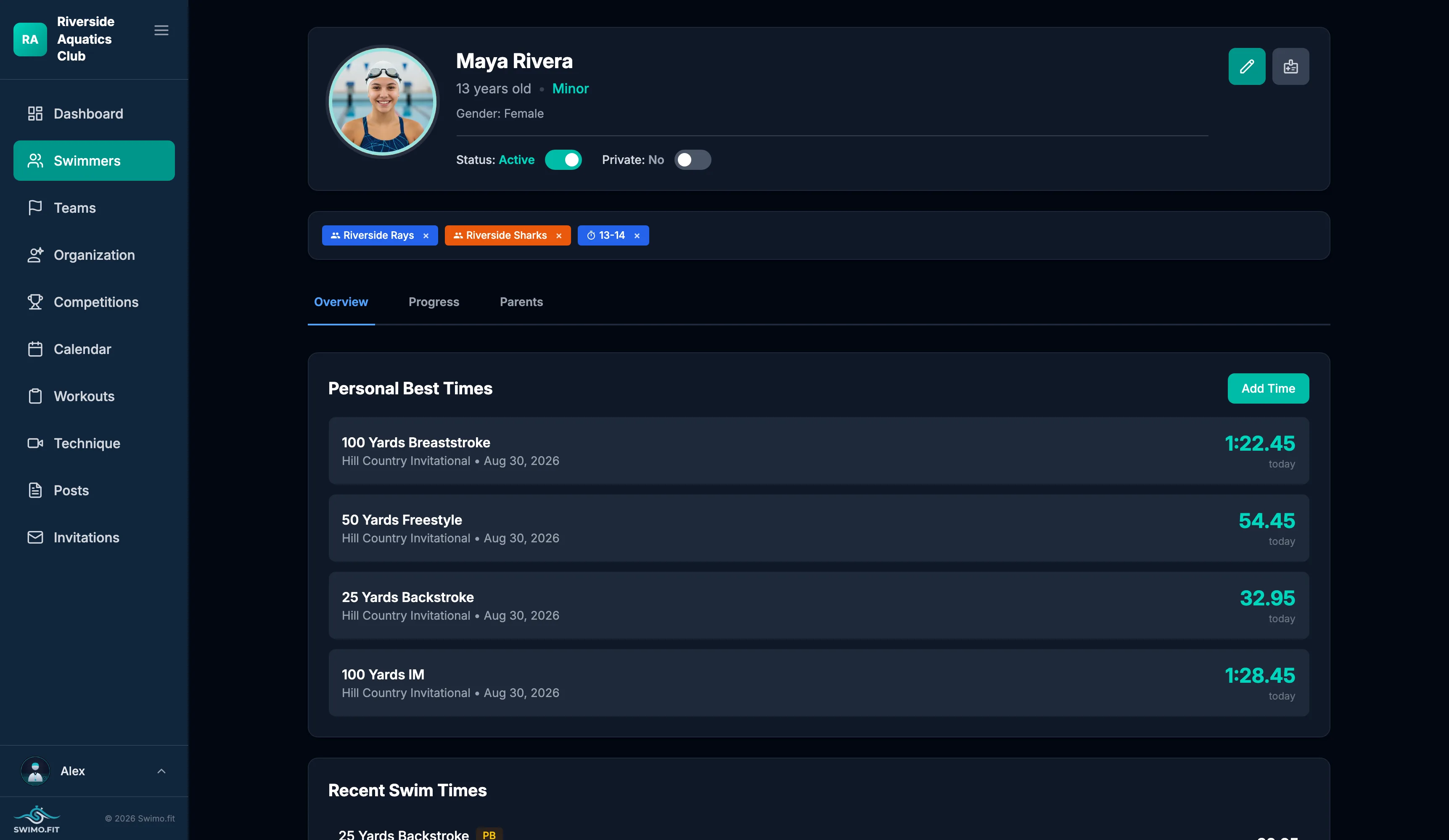
Swimo.fit carries the motivational standards grid built in. Every imported time is placed against the swimmer's current age group, gender, and course automatically, so their profile always shows where they stand and what the next rung is. No lookup tables, no spreadsheet math after every meet. Families see the same progress in their own view.